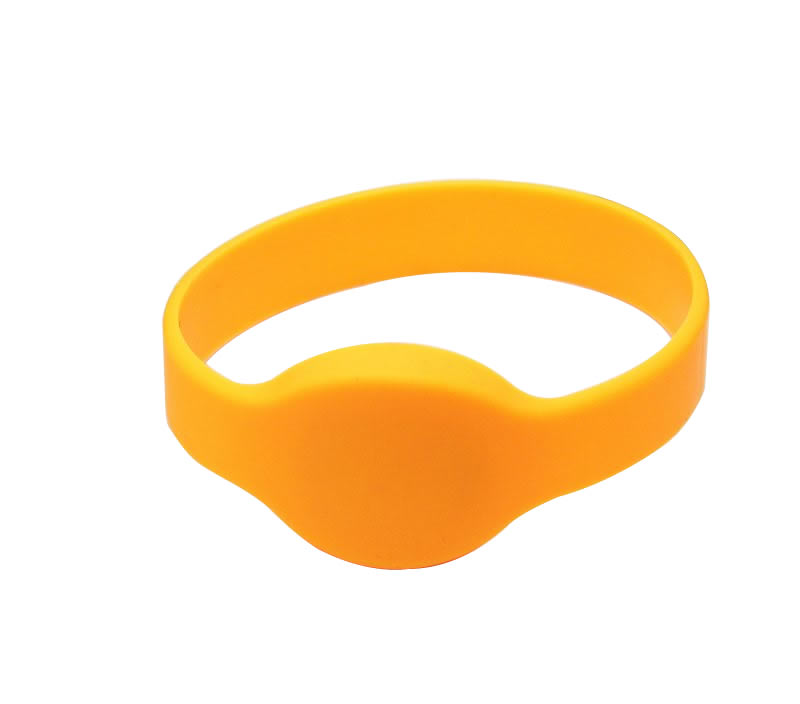
Zone and role control
Unique UIDs plus colour-coded bands let the controller apply role, shift and area permissions, and make staff, visitors and contractors easy to tell apart.
RFID access control wristbands are wearable credentials for doors, turnstiles, lifts and restricted zones.
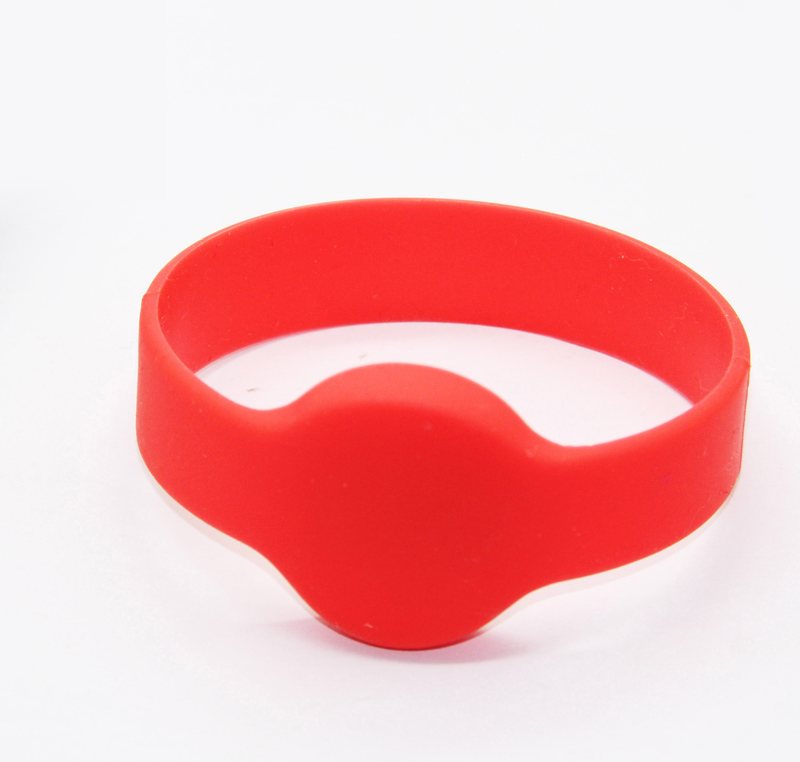
RFID access control wristbands are wearable credentials for doors, turnstiles, lifts and restricted zones. They replace a card wherever hands need to stay free or a card is easily lost, shared or forgotten: office entrances, factory floors, construction sites, campuses, data centres and venue back-of-house areas.
The chip has to match the installed readers and the credential format your controller expects. We build 125 kHz TK4100 and T5577 bands for legacy proximity systems, 13.56 MHz MIFARE Classic and MIFARE DESFire EV1 for modern controllers, and UHF bands for hands-free portal reading. The unique UID on each band is what your software enrols, so permission levels, time windows and zone rules stay under your control. We can supply encoded batches, UID lists, printed serials and role-based colours, and we recommend testing a pilot batch against the real readers before rollout.
What changes when a wearable credential replaces a card or a paper ticket.
Unique UIDs plus colour-coded bands let the controller apply role, shift and area permissions, and make staff, visitors and contractors easy to tell apart.
LF proximity, HF/NFC and UHF options cover the majority of installed door readers, turnstiles and portal antennas.
Sealed silicone constructions withstand rain, washdown, dust, sweat and impacts on factory and outdoor sites.
UID lists, sequential numbering and encoded batches support clean enrolment, audit records and instant cancellation of a lost credential.
Six common sites, and the access points a wearable credential has to open at each one.
Staff entrances, lift destinations, meeting rooms and server rooms, with permissions applied by role and working hours.
Shift crews, production cells, loading bays and canteen points, where a sealed band survives dust, washdown and gloves.
Daily contractor and visitor issuance, induction status, restricted plant zones and roll-call or evacuation counts.
Student and staff entry, laboratories, medicine stores and back-of-house corridors, with colours marking access tiers.
Perimeter gates, back-of-house routes, media and VIP zones, plus re-entry checks at busy ingress points.
Room and cabinet-level permissions, two-person rules and audit trails, backed by fast cancellation when a credential is retired.
Materials and chip platforms we most often supply for this application.
RFID silicone wristbands are reusable, waterproof wearable tags with an embedded chip that opens doors, validates tickets, replaces cash and identifies members.
View RFID Silicone Wristband details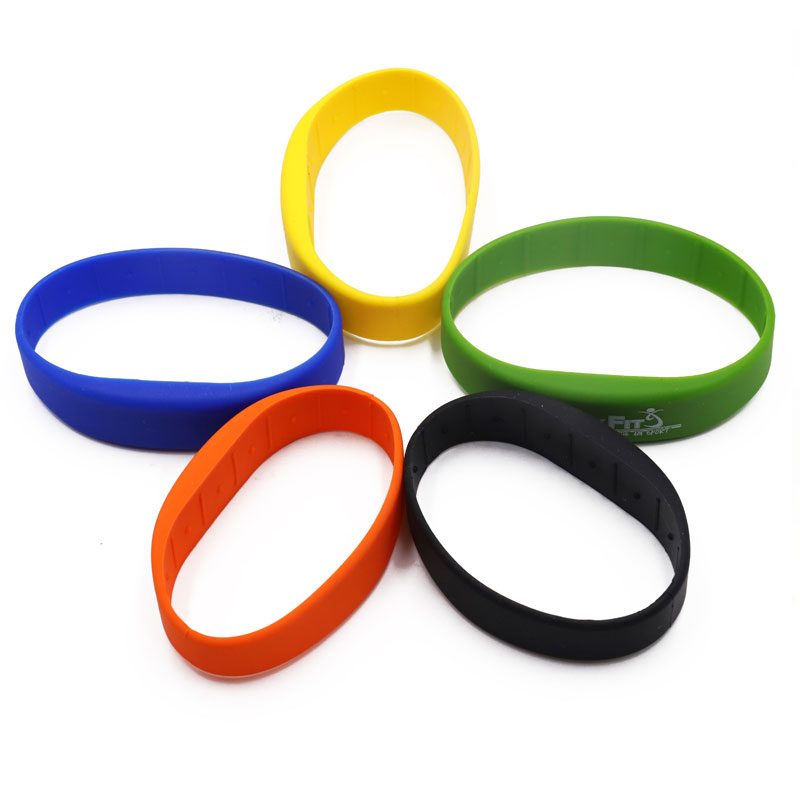
MIFARE wristbands operate at 13.56 MHz and follow the ISO/IEC 14443-A standard.
Explore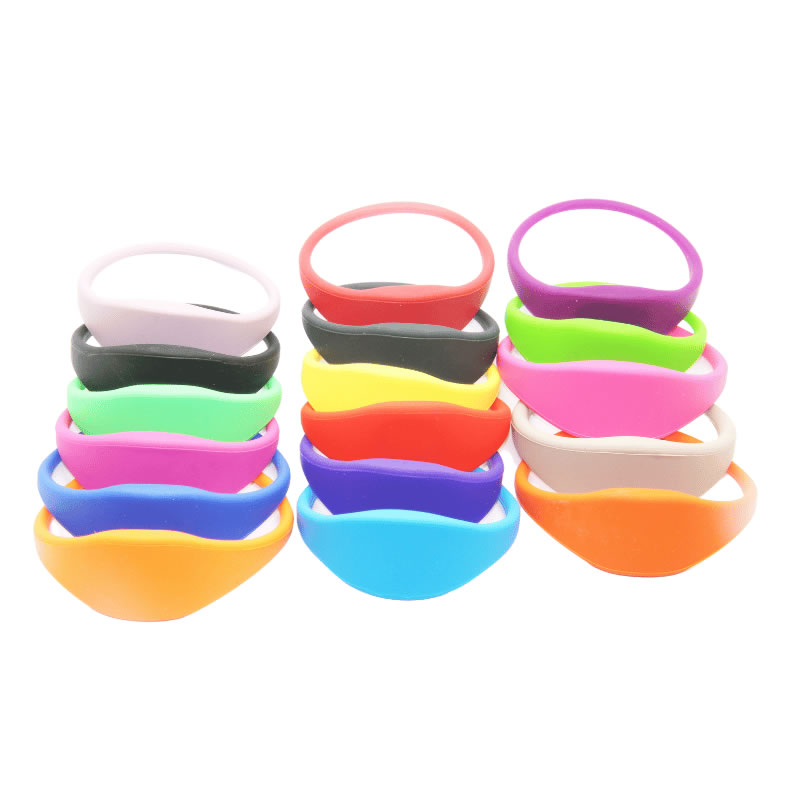
125 kHz LF wristbands are low-frequency proximity credentials built around chips such as TK4100, EM4200/4305, T5577 and Hitag.
ExplorePractical answers for buyers planning this kind of deployment.
In most cases yes, once the chip and credential format match what is already installed. The wristband carries the UID or sector data your reader presents to the controller, so we need the reader and controller models, the frequency, and an existing card or fob together with the UID format your software expects. We then encode a pilot batch for you to test on real doors and turnstiles before the production run.
It is decided by your installed hardware. Legacy proximity systems usually read 125 kHz TK4100, EM4200/4305, T5577 or Hitag chips; modern controllers commonly use 13.56 MHz MIFARE Classic 1K or MIFARE DESFire EV1; UHF suits hands-free portals and zone detection rather than a deliberate tap. If staff also need to tap the band with a phone, an NTAG or other NFC Forum chip is a different requirement and should be specified up front.
Yes, MIFARE DESFire EV1 is available and is often chosen where the credential data needs application keys rather than a plain UID. Key ownership, key diversification, the file structure and who performs the encoding must be agreed with your system integrator before production. We encode and verify the agreed format on a sample batch; we do not supply the master keys or the controller-side security configuration.
That is a common deployment. A single UID can be enrolled across door controllers, lift destinations, turnstiles, lockers, time and attendance terminals and point-of-sale or canteen systems, so staff carry one credential. Whether stored value, offline locks or multi-application data are possible depends on the chip memory and what your platforms support, so we recommend an end-to-end pilot test with your integrator.
Permissions live in your access control software, not in the wristband. Each band provides a unique UID that the controller maps to a person, role, time window and list of allowed doors or zones. We help make that mapping practical by supplying sequential numbering, UID lists, encoded sector data and distinct colours or printed labels for employees, contractors, visitors and VIPs. Zone rules and schedules are configured on your system.
They help, but they are one part of the setup. A unique UID plus tamper-evident or locking closures makes a band hard to hand over without visible damage, and your controller can enforce anti-passback rules such as requiring an exit read before re-entry. Physically stopping tailgating needs turnstiles, mantraps or attendant checks; no wristband can do that on its own. Tell us the closure style and we will supply a sample for your gate test.
Yes. We can provide the encoded UIDs, TIDs and matching printed serials or QR codes in a spreadsheet for import into your access control or identity software, in the column format your system expects. Tell us the numbering range, whether every band needs a unique record, and whether the printed identifier must match the encoded UID exactly. Every encoded batch is verified before dispatch.
Because each band has a unique UID, your administrator can cancel or blacklist that credential immediately in the controller and issue a replacement, without reissuing the whole population. Reusable silicone bands can be cleaned and reassigned; tamper-evident one-time bands are better for day visitors and short-term contractors. We can also pack bands by department, role or issue date so enrolment and returns are easier to audit.
Sealed one-piece silicone is the usual choice for wet, dusty or high-impact environments, while elastic and fabric bands suit dry indoor staff use and PVC or vinyl bands suit short-term visitor issuance. We match Pantone colours, print logos, employee or visitor numbers, barcodes and QR codes, and can mark different roles at a glance. Send vector artwork with fonts outlined plus any cleaning or chemical exposure the band will face, and we will confirm the construction at quotation stage.
Share the reader and controller models and credential format, preferred chip, expected headcount and quantity, material and closure, colour or role coding, artwork, variable data and encoding requirements, packaging and delivery destination. Minimum order quantity, sample and production lead times are confirmed at quotation stage. We recommend an encoded pilot batch tested on your actual doors, turnstiles and software before rollout, and material or compliance documentation such as RoHS or REACH is available on request.
Tell us material, quantity, chip and artwork. Our export team replies with a clear quotation and a sampling plan before bulk production.