Social media activations
We can build Social media activations into the wristband format that fits this use case.
NFC wristbands use 13.56 MHz NFC Forum compatible chips such as NTAG213, NTAG215 and NTAG216, so a tap with a smartphone can open a URL, launch an app action, check in a guest or validate a ticket.
NFC wristbands use 13.56 MHz NFC Forum compatible chips such as NTAG213, NTAG215 and NTAG216, so a tap with a smartphone can open a URL, launch an app action, check in a guest or validate a ticket.
NTAG chips are popular for marketing activations, photo booths, social sharing and digital business cards because virtually every modern phone can read them. They are also used for lightweight access and ticketing. We can pre-encode URLs, write locked NDEF records, print a matching QR code and serialise every band.
In short: Works with unmodified smartphones, no app required for basic URL tags.
Chip models we commonly embed for this frequency. See the complete chip reference for the full list.
Scroll horizontally to see all columns
| Frequency | Chip model | Protocol / standard |
|---|---|---|
| 13.56 MHz | NTAG 213 / 215 / 216 | ISO/IEC 14443-A |
| 13.56 MHz | MIFARE Ultralight EV1 / C | ISO/IEC 14443-A |
| 13.56 MHz | ICODE SLI | ISO/IEC 15693 |
| 13.56 MHz | ICODE SLIX / SLIX2 / SLIX-L | ISO/IEC 15693 / ISO/IEC 18000-3 |
We can build Social media activations into the wristband format that fits this use case.
We can build Photo booths and sharing into the wristband format that fits this use case.
We can build Smart posters and digital cards into the wristband format that fits this use case.
We can build Event check-in into the wristband format that fits this use case.
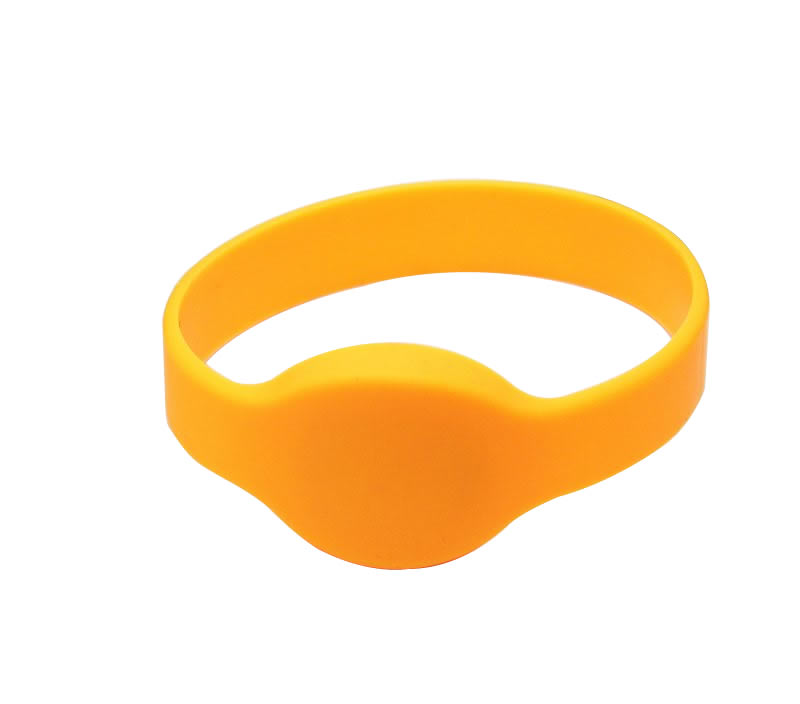
RFID silicone wristbands are reusable, waterproof wearable tags with an embedded chip that opens doors, validates tickets, replaces cash and identifies members.
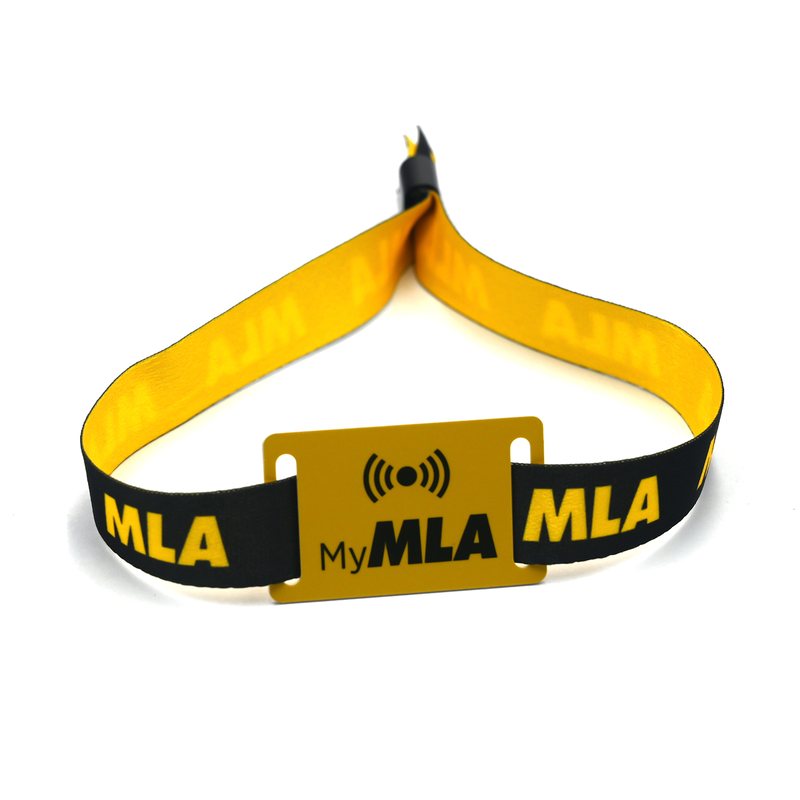
View RFID Silicone Wristband detailsRFID fabric wristbands are woven or printed textile straps fitted with an RFID tag or a moulded face plate.
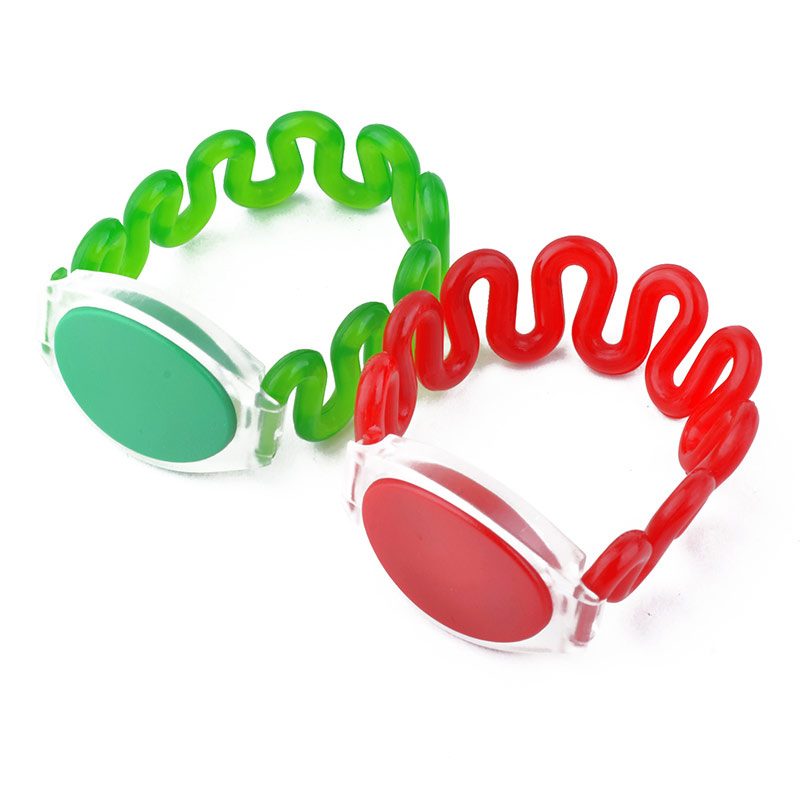
View RFID Fabric Wristband detailsRFID PVC wristbands are lightweight plastic bands with an embedded RFID inlay and an adjustable snap closure.
View RFID PVC Wristband detailsTechnical questions we are most often asked about this frequency.
A standard NDEF URL or text record written to an NTAG chip can be read by most modern phones without installing an app: the guest simply taps the band against the phone's NFC antenna. Older handsets, background-reading restrictions on some iOS models and locked-down corporate devices can behave differently, so we recommend testing a sample with the phones your audience will actually use. App launches, wallet integrations and custom records need your app or platform to support the tag type.
Both are possible. If we leave the tag writable, you can rewrite the NDEF record with a phone or desktop encoder; if the content must stay fixed, we set the lock bytes so the record becomes read-only and cannot be overwritten. Locking is irreversible, so we confirm the final URL, numbering and record layout on an approved sample before the production run.
NTAG213 suits short URLs and simple check-in tags, NTAG215 handles longer links and vCard-style records, and NTAG216 gives the largest user memory for multiple records or larger payloads. Tell us the URL length and the records you want to store and we will recommend the smallest chip that fits, because memory size affects cost. All three work at 13.56 MHz and are NFC Forum type 2 compatible.
NFC is a 13.56 MHz HF technology built on standards such as ISO/IEC 14443-A and ISO/IEC 15693, so NFC wristbands are part of the HF RFID family. MIFARE also runs at 13.56 MHz but uses sector-based memory and keys instead of NFC Forum NDEF records, and not every MIFARE chip is NFC Forum compliant. Choose an NTAG or other NFC Forum tag when a phone must open a link; choose MIFARE Classic or DESFire when the band has to match an existing hotel, gym or access reader. UHF at 860-960 MHz is a separate family used for long-range reads.
NFC is deliberately short range, typically a few centimetres, so guests tap rather than being read at a distance. Reliability depends on the antenna size inside the band, where the phone's NFC antenna sits, nearby metal such as lockers or a metal face plate, thick phone cases and how the band sits on the wrist. We position the inlay where it is easy to tap and recommend testing a physical sample with your actual phones and readers.
Only if that system reads the same chip and protocol. Readers built for MIFARE Classic, DESFire or 125 kHz LF will not necessarily read an NTAG tag, and cashless or ticketing platforms often need a specific UID or data format. Share the reader or lock model, an existing credential and the UID format your software expects; we will match the chip, encode a pilot batch and verify it against your hardware before the full run.
We can write NDEF URL, text, vCard or app-launch records, apply password protection or lock bytes, and laser-mark or print matching serials, QR codes and UIDs. A spreadsheet of UIDs and printed numbers can be supplied for import into your access, ticketing or membership platform. Tell us whether every band needs a unique record, the numbering range, and whether the printed code must match the encoded UID exactly.
The same 13.56 MHz inlay can be sealed into silicone, fabric, elastic, PVC, vinyl, paper or a wooden face plate. Silicone suits pools and multi-day wear, fabric and vinyl suit single-use event issuance, and wooden or elastic builds suit hotels and resorts. Adjustable or reusable clasps work for season passes and memberships, while tamper-evident one-time closures prevent pass-back at paid admission. We confirm the exact construction at quotation stage.
Yes. We print full-colour artwork, logos, QR codes and variable serial numbers and can mark the tap area so guests know where to hold the phone. Metallic inks and full metal face plates can detune the antenna, so we choose the inlay position and print method accordingly and verify tap performance on a physical printed proof before bulk production. Send vector artwork with fonts outlined plus any Pantone references.
Share the wristband material and format, preferred chip or the target phone and reader, quantity, the URL or NDEF record to encode, whether tags should be locked, artwork plus variable data, and your required delivery date. Minimum order quantity, sample and production lead times are confirmed at quotation stage, and we recommend approving an encoded printed sample before the run. Material or compliance documentation such as RoHS or REACH is available on request.
Send us your reader model or an existing card. We will verify the chip, recommend a wristband construction and encode a sample for testing.