Hands-free workouts
No card to carry, drop or forget in a locker.
Gym RFID wristbands give members a hands-free way to open lockers, pass turnstiles, check into classes and identify themselves at the front desk.
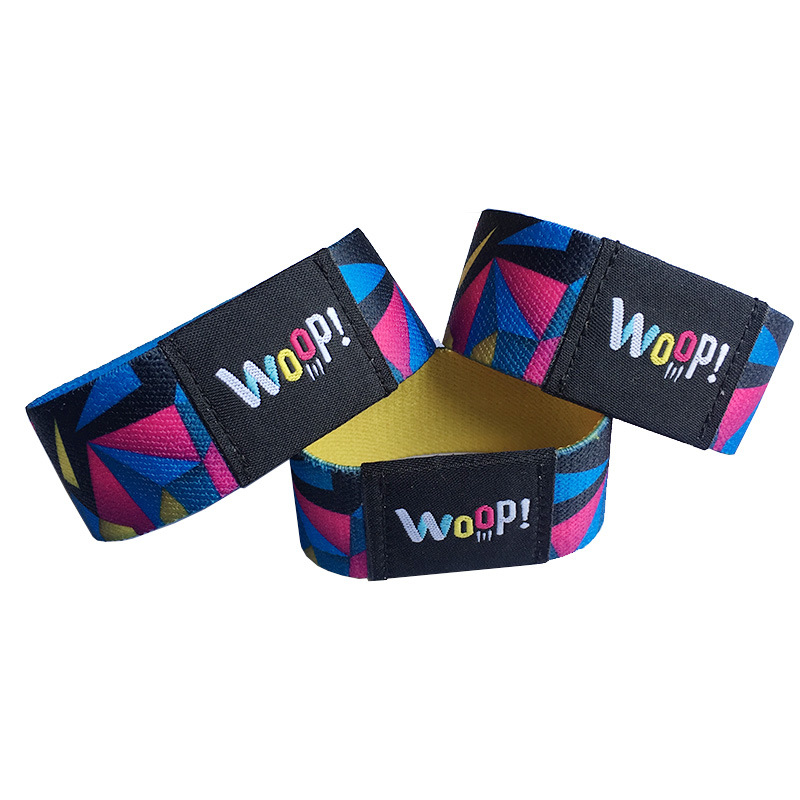
Gym RFID wristbands give members a hands-free way to open lockers, pass turnstiles, check into classes and identify themselves at the front desk. Reusable silicone and elastic constructions are designed for daily wear and repeated scanning.
Most clubs use 125 kHz proximity chips for legacy lockers or 13.56 MHz MIFARE and NTAG chips for modern systems. Elastic straps fit every member without sizing, while silicone loops withstand sweat, showers and pool areas. We can print membership tiers, numbers and your club logo.
What changes when a wearable credential replaces a card or a paper ticket.
No card to carry, drop or forget in a locker.
Smooth silicone and sealed modules wipe clean easily.
Colour-coded bands distinguish members, guests and staff.
LF, HF/NFC and UHF options cover old and new installations.
Materials and chip platforms we most often supply for this application.
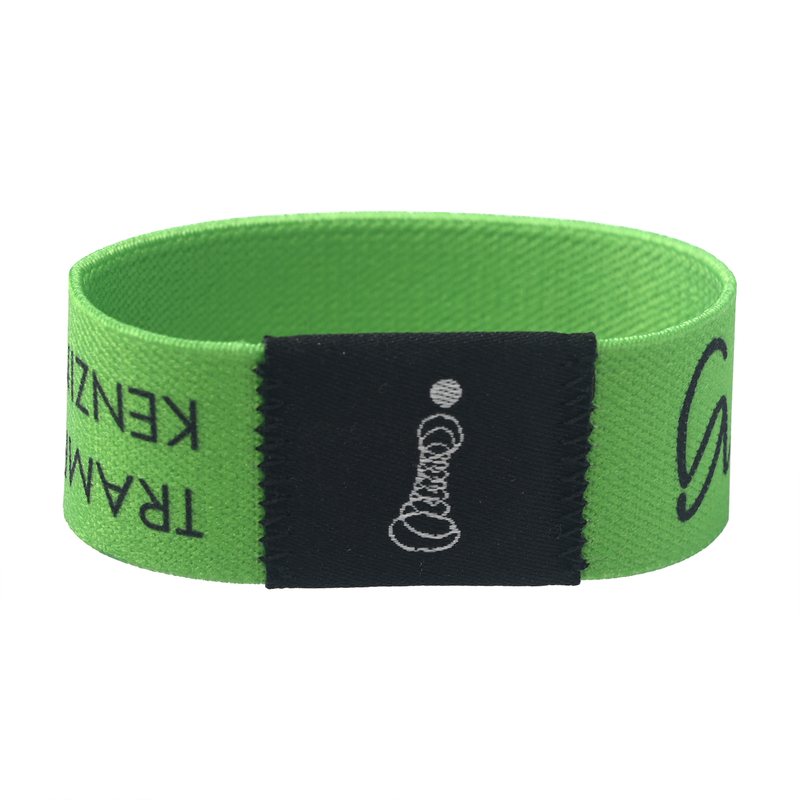
An RFID elastic wristband is a stretchable woven band with an RFID module mounted on a flat face plate.
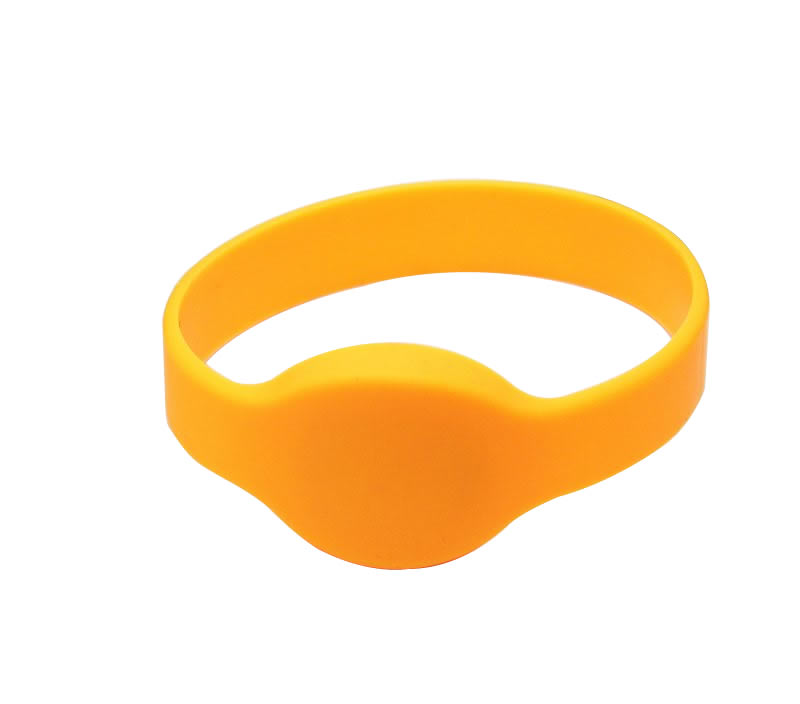
View RFID Elastic Wristband detailsRFID silicone wristbands are reusable, waterproof wearable tags with an embedded chip that opens doors, validates tickets, replaces cash and identifies members.
View RFID Silicone Wristband details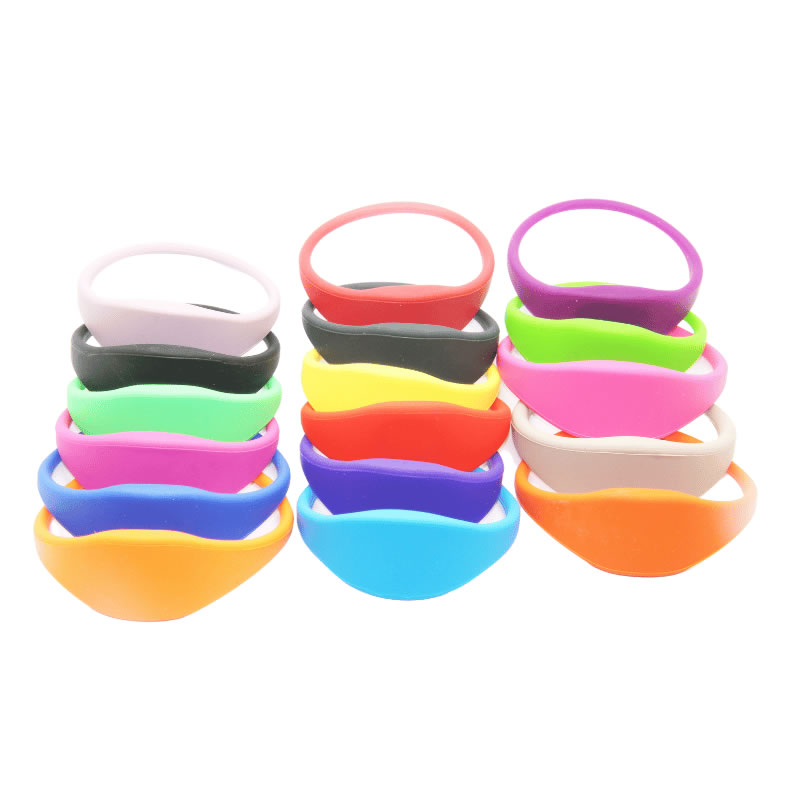
125 kHz LF wristbands are low-frequency proximity credentials built around chips such as TK4100, EM4200/4305, T5577 and Hitag.
ExplorePractical answers for buyers planning this kind of deployment.
It is decided by the readers already installed, not by the band. Legacy proximity lockers usually read 125 kHz TK4100 or T5577 chips, while newer systems use 13.56 MHz MIFARE Classic, MIFARE DESFire EV1 or NTAG chips. Send us the reader or locker lock model, or an existing key fob, and we will match the chip and credential format and confirm it on an encoded sample before production.
In most cases yes, once the chip and data format match. The same UID can be enrolled in your locker controllers, entry turnstiles, class check-in terminals, point-of-sale and membership platform. Share the reader models and the UID or sector format your software expects; we will encode a pilot batch for you to test against the actual hardware before the full order.
Proximity LF and HF/NFC wristbands are deliberately short range, typically a few centimetres, so members tap rather than being read at a distance. Read performance depends on the inlay size and position, the reader antenna and nearby metal such as locker bodies or turnstile housings. We place the inlay where it is easy to tap and recommend testing a physical sample at your busiest entry point. For hands-free zone tracking, UHF is a separate option.
Yes. One-piece silicone bands with sealed chip housings are made for repeated exposure to sweat, shower water, chlorine, sunscreen and cleaning products, which is why they suit pools, wet areas and spa zones. Elastic woven and wooden-face bands are better kept to dry workout areas. Smooth sealed surfaces also wipe clean easily between users; tell us your cleaning routine so we can recommend a construction that holds up to it.
Reusable silicone and elastic bands can be cleaned and reassigned to a new member if your software supports it. Every chip carries a unique UID, so a lost band can be deactivated immediately in the access system and a replacement issued, and a cancelled membership can be blocked or blacklisted. Many clubs also offer the band as a take-home membership item; we can supply both reusable and tamper-evident one-time closures.
Silicone loops suit wet areas and long-term daily wear, elastic woven straps fit every wrist without sizing and are comfortable during training, and fabric or vinyl bands work well for day passes and guest issuance. Closures can be adjustable and reusable for members or one-time and tamper-evident for visitors. We can supply adult, youth and children's lengths and a range of widths; we confirm the exact construction at quotation stage.
Yes. We match brand Pantone colours, print club logos and sponsor artwork, and add variable QR codes, barcodes, serial numbers or member IDs. Colour coding is commonly used to separate members, guests, staff, personal training clients and VIP tiers at a glance. Send vector artwork with fonts outlined plus your Pantone references; we approve a printed proof for durability before the production run.
Yes. We can write UIDs, NDEF records or sector data with your keys, laser-mark or print matching numbers, and supply a spreadsheet of UIDs, TIDs and printed codes for import into your membership or access software. Tell us whether each band needs a unique record, the numbering range, and whether the printed code must match the encoded UID exactly. We verify the encoded batch before dispatch.
That is the usual goal. One chip can be registered across locker locks, entry gates, class and court booking terminals, vending or café points of sale, and towel or equipment rental, so members carry nothing else. Whether stored-value wallets or zone permissions are possible depends on the chip memory and what your platform supports. We recommend a trial batch tested end to end with your software provider before rollout.
Share the locker or reader models and chip format, expected member volume and quantity, preferred material and closure, colour and artwork, variable data, encoding requirements and delivery destination. Minimum order quantity, sample and production lead times are confirmed at quotation stage. We recommend an encoded printed pilot batch tested on your real lockers, gates and software before the full rollout, and material or compliance documentation such as RoHS or REACH is available on request.
Tell us material, quantity, chip and artwork. Our export team replies with a clear quotation and a sampling plan before bulk production.