Bedside verification
Scanning replaces reading small print by hand and removes a manual transcription step at the point of care.
RFID patient wristbands give every patient a wearable identity credential from admission to discharge.
RFID patient wristbands give every patient a wearable identity credential from admission to discharge. Instead of reading small print or re-typing a number, staff scan the band at registration, at the bedside, during medication rounds, before a procedure and at handover between wards, so the right record is matched to the right person.
A patient band is a carrier for an identifier, not a medical device: the chip or printed code points to the record held in your EMR, HIS or laboratory system. For short stays, printable paper, thermal or PVC/vinyl bands with a barcode, QR code and an RFID inlay are the practical choice; for longer stays or repeated treatments, a soft silicone or elastic band may be preferred. We print variable fields, encode the chip with a unique ID and match the encoded ID to the printed number, then supply a mapping file for your IT team. Materials, disinfectant resistance and data handling should be validated against your hospital's own clinical, infection-control and privacy procedures before rollout.
What changes when a wearable credential replaces a card or a paper ticket.
Scanning replaces reading small print by hand and removes a manual transcription step at the point of care.
Names, medical record numbers, dates of birth, barcodes and QR codes printed per band from your data file.
A one-time closure shows clearly if a band has been removed, reopened or transferred to another person.
Soft, lightweight, latex-free options with sizes for newborns, children and adults, and smooth edges for sensitive skin.
Six points in the patient journey where a scannable wristband replaces a manual identity check.
The band is printed and issued when the patient record is created, linking the wristband ID to the medical record number.
A bedside scan confirms the patient against the prescription or blood product before administration.
Paired bands link mother and newborn through feeding, rooming-in, nursery transfers and discharge checks.
Printed codes on the wristband and sample label are matched at collection, avoiding hand-copied identifiers.
Identity is re-checked at pre-op, imaging, theatre handover and transfer between wards or departments.
Day surgery, dialysis, oncology and care-home residents keep a consistent identifier across repeat visits.
Materials and chip platforms we most often supply for this application.
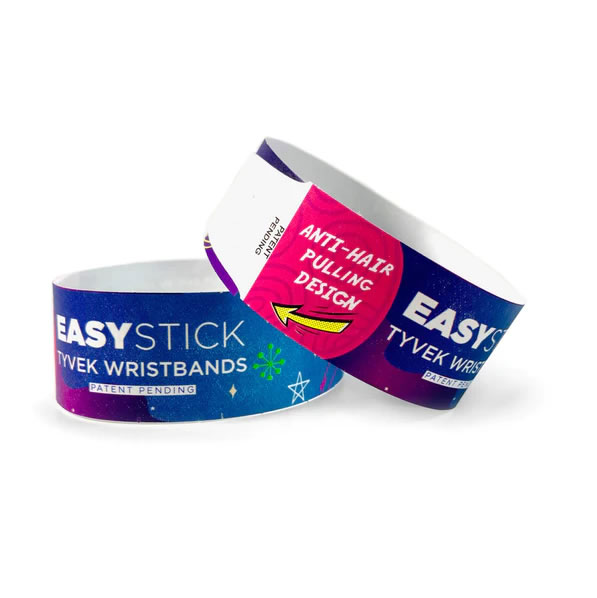
RFID paper wristbands are lightweight, tear-resistant paper or Tyvek-style bands with an embedded RFID inlay, used for short-term admission and identification.
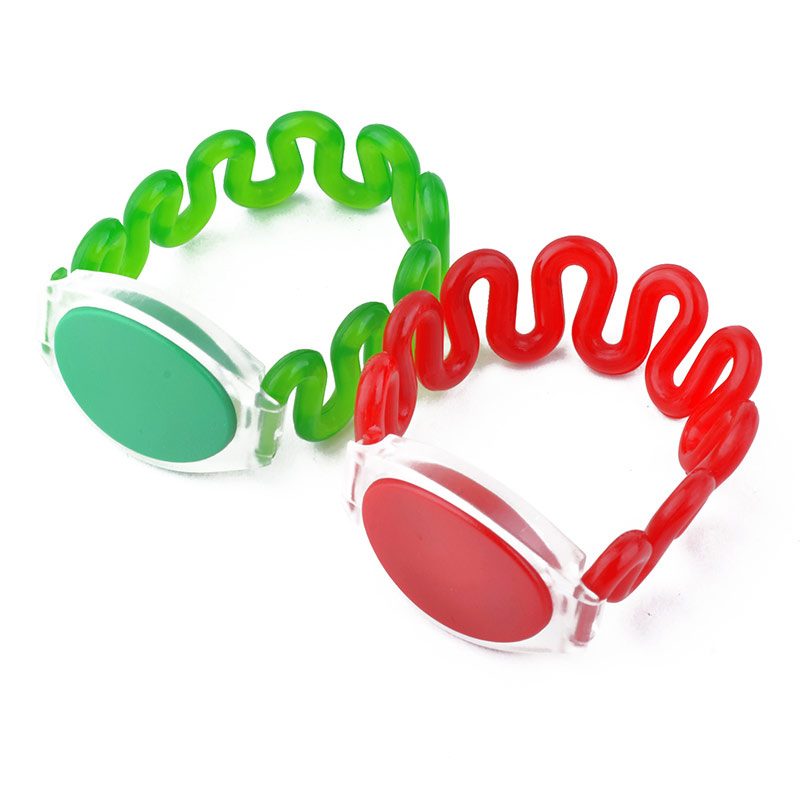
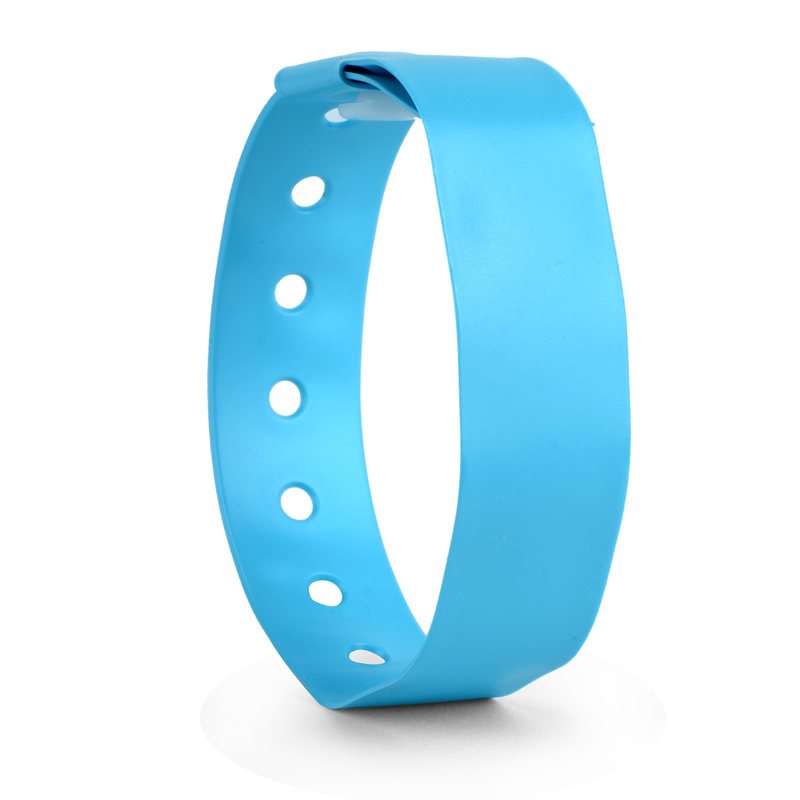
View RFID Paper Wristband detailsRFID PVC wristbands are lightweight plastic bands with an embedded RFID inlay and an adjustable snap closure.
View RFID PVC Wristband details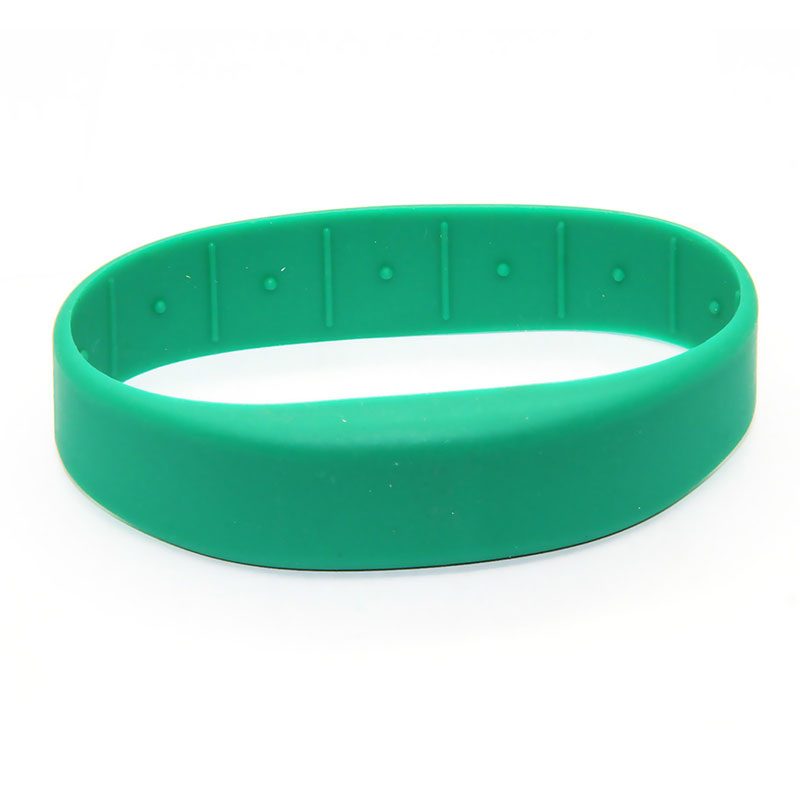
NFC wristbands use 13.56 MHz NFC Forum compatible chips such as NTAG213, NTAG215 and NTAG216, so a tap with a smartphone can open a URL, launch an app action, check in a guest or validate a ticket.
ExplorePractical answers for buyers planning this kind of deployment.
Yes. Supply the data structure or a secure file and we can print a unique name, medical record number, date of birth, barcode, QR code and serial number on each band, using direct thermal or thermal-transfer printing depending on the material. We can also match the printed identifier to the encoded chip ID. Because these files contain patient information, agree the transfer, storage and deletion method with your IT and privacy teams before production, and approve a printed proof for legibility and scan reliability.
We can supply soft, latex-free options with smooth, rounded edges, and adjustable lengths for newborns, children and adults. Materials for clinical use must be assessed by your own clinical team, so request physical samples and material documentation, and run them through your skin-sensitivity and infection-control procedures before placing a hospital order. We do not make medical or biocompatibility claims; supporting documentation is available on request.
It depends on what your staff scan with. Existing barcode scanners and PDAs read the printed code, while 13.56 MHz HF/NFC chips such as NTAG or MIFARE suit NFC readers and phone taps, 125 kHz LF suits older proximity readers, and UHF suits hands-free zone or asset-level tracking rather than a bedside tap. Many hospitals start with a printed barcode plus an HF/NFC inlay so the same band works with both workflows. Tell us your reader or scanner model and we will confirm the inlay on a sample.
The wristband supplies the identifier; your systems hold the record. We can encode a unique UID or NDEF record, print a matching barcode or QR code, and provide a mapping file in the column format your integration team expects so the ID can be linked to a medical record number. Share the scanner models, the identifier format and how your software performs the lookup, then test an encoded pilot batch against your real readers and test environment before the full rollout.
We normally recommend storing only a unique identifier on the chip and keeping names, diagnoses and other patient information inside your hospital systems. That keeps the band useful even when a record changes and limits what is exposed if a band is lost. If your workflow needs an NDEF record, sector data or an on-chip number, we can encode it to your specification; access control, encryption, retention and privacy compliance remain the responsibility of your IT and clinical governance teams.
A band is issued at registration, stays with the patient through ward transfers and procedures, and is removed or deactivated at discharge. A tamper-evident one-time closure makes unauthorised removal visible, and a replacement can be issued with a new identifier that your system links back to the same record. We can pack bands by ward, admission type or number range and supply sequential IDs so issuing, re-issuing and reconciliation are straightforward. Define the replacement and cancellation rules with your clinical team before go-live.
Paired bands give mother and newborn matching identifiers that staff can verify at feeding, rooming-in, nursery transfer and discharge; printed colours or number ranges can help distinguish siblings and twins. Some hospitals also link the infant band to nursery doors or exit monitoring, but those rules and alarms are configured in your own security system, not by the wristband. We supply the paired identifiers, sizes suitable for newborn wrists or ankles and a sample set for your maternity team to validate.
PVC, vinyl and silicone constructions are water resistant and can be wiped clean, while paper and direct-thermal bands are better for short stays and lighter handling. Alcohol, chlorine-based agents and repeated wiping affect print durability differently by material, so tell us which disinfectants and cleaning frequency your wards use and we will recommend a construction and print method, then provide samples for your infection-control team to test. We do not claim sterilisation or clinical certification.
We can supply narrow, soft bands for newborn wrists or ankles, child and adult lengths with adjustable holes, and wider face areas for printed identifiers. One-time tamper-evident closures suit short admissions, while reusable adjustable clasps are used for long-term care or repeat-visit programmes where your policy allows a wipeable band. Tell us the age mix, expected wear duration and whether swelling or sensitivity is a concern, and we will propose a size range for sampling.
Share the material and print method, chip or identifier format, patient volumes and expected quantity, size mix, closure type, artwork and variable data fields, encoding and mapping requirements, packaging by ward, and the delivery destination. Minimum order quantity, sample and production lead times are confirmed at quotation stage. We recommend a pilot batch tested with your real scanners, EMR test environment and cleaning routine before rollout, and material or compliance documentation such as RoHS or REACH is available on request.
Tell us material, quantity, chip and artwork. Our export team replies with a clear quotation and a sampling plan before bulk production.