One band for the whole day
Entry, lockers, food, retail and ride access on a single credential.
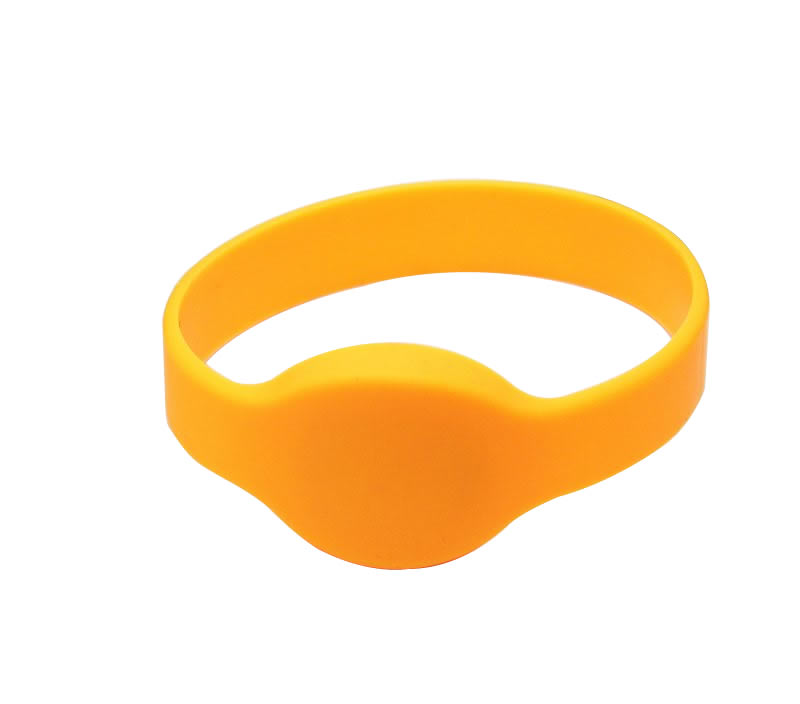
An amusement park RFID wristband replaces the paper ticket, the locker key and the payment card with one wearable credential.
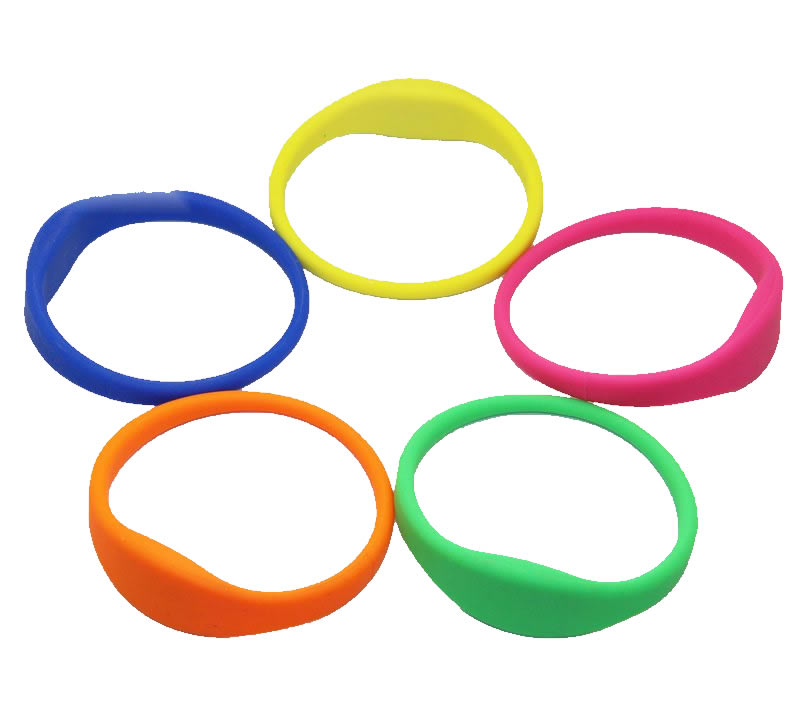
An amusement park RFID wristband replaces the paper ticket, the locker key and the payment card with one wearable credential. Visitors use the wristband for ticket verification, locker access, cashless consumption and ride waiting management inside the park.
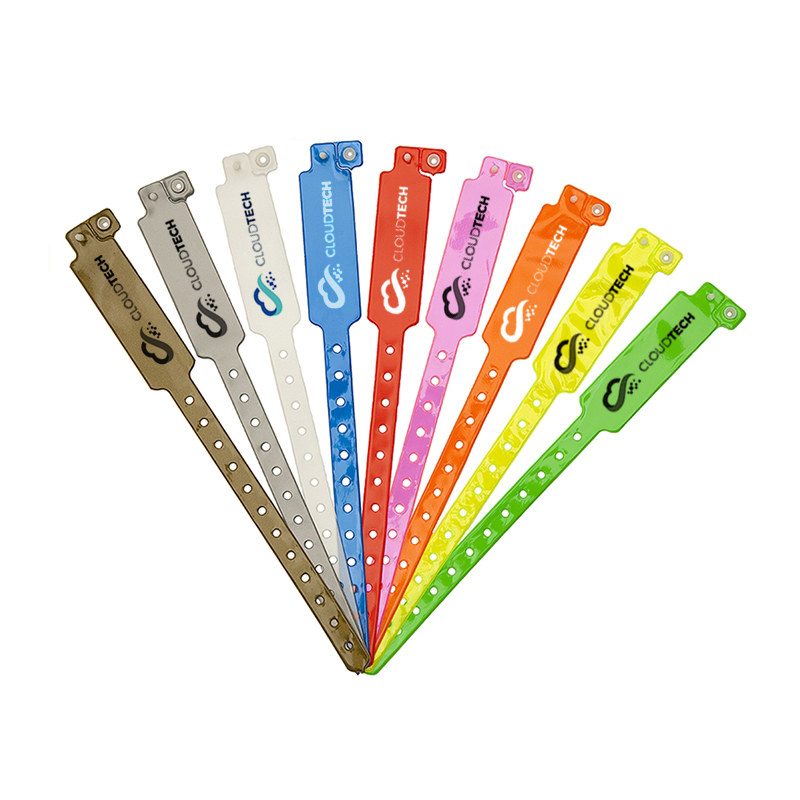
Parks normally issue a waterproof silicone band for season pass holders and staff, and a tamper-evident fabric or vinyl band for day guests. We confirm the chip against your ticketing and access control platform, then encode UIDs, print variable QR codes or serial numbers, and colour-code bands by guest tier. HF/NFC and MIFARE chips suit tap points at gates and lockers, while UHF supports hands-free zone detection and queue timing.
What changes when a wearable credential replaces a card or a paper ticket.
Entry, lockers, food, retail and ride access on a single credential.
Contactless validation at gates and virtual queue taps keep lines moving.
Closed-loop cashless wallets make small purchases fast and trackable.
Waterproof silicone and sealed modules survive pools, rain and water rides.
Materials and chip platforms we most often supply for this application.
RFID silicone wristbands are reusable, waterproof wearable tags with an embedded chip that opens doors, validates tickets, replaces cash and identifies members.
View RFID Silicone Wristband detailsDisposable RFID vinyl wristbands are single-use laminated bands with a tamper-evident closure and an embedded chip.
View RFID Vinyl Wristband details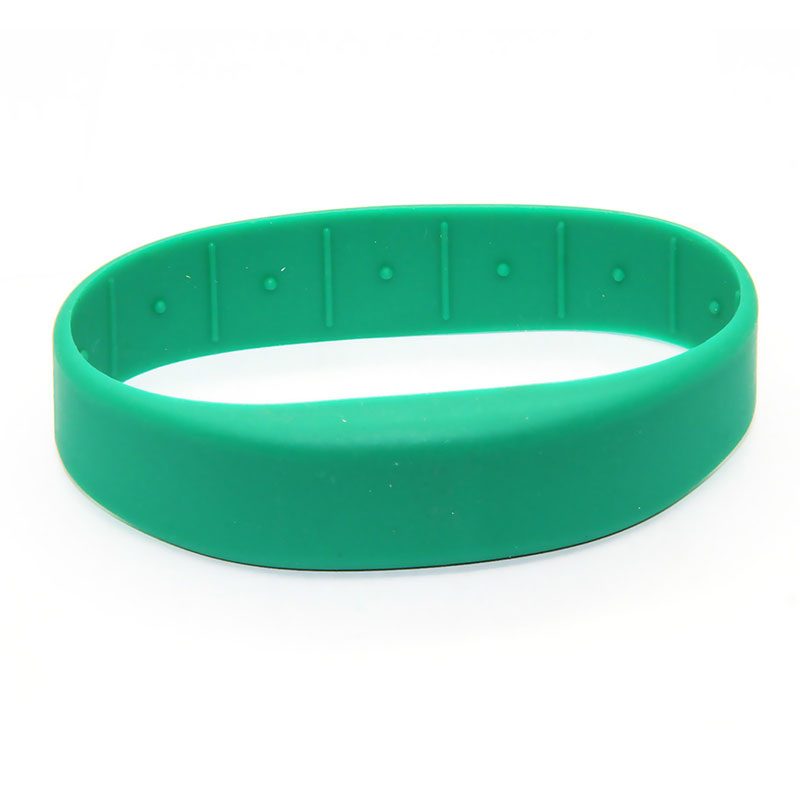
NFC wristbands use 13.56 MHz NFC Forum compatible chips such as NTAG213, NTAG215 and NTAG216, so a tap with a smartphone can open a URL, launch an app action, check in a guest or validate a ticket.
ExplorePractical answers for buyers planning this kind of deployment.
The wristband is the physical credential; the entitlement, wallet balance and access rules live in your own software. Tell us the reader models, frequency and the UID, sector or NDEF data format your platform expects, and we encode and verify every band before shipment. We can also supply a sample batch encoded to your mapping for testing at real gates, lockers and tills before you commit to a production run.
For deliberate tap points such as turnstiles, locker locks, ride entrances and cashless terminals, 13.56 MHz HF/NFC chips including MIFARE Classic 1K, MIFARE Ultralight EV1 and DESFire EV1 are the usual choice because the guest has to present the band. UHF is used when a park wants hands-free zone detection, queue timing or crowd-flow data over a longer range. Some parks run both technologies in separate systems; we confirm the chip against each reader rather than assuming one band fits every point.
Yes, in most deployments a single unique identifier is read at every touchpoint and your platform decides what that guest is allowed to do. Keeping the balance and permissions off the band means a lost or damaged wristband can be cancelled and reissued without losing the guest's purchase history. Where a system genuinely requires separate applications or sectors on the chip, we can encode to your specification and provide the UID and data mapping for your integrator.
Sealed silicone bands with encapsulated modules are the standard choice for waterparks, log flumes and all-weather parks, and vinyl or fabric one-day bands are water resistant for normal rain and splash exposure. Chlorinated water, sunscreen, sweat and repeated abrasion affect print durability differently by material and print method, so tell us the actual exposure and cleaning routine and we will propose a construction. We recommend testing samples in your own pools and ride environment; we do not claim a waterproof rating or certification without agreed test conditions.
Season pass holders, members and staff generally get durable reusable silicone bands, while single-day guests usually get one-time tamper-evident fabric or vinyl bands. Many parks run both in parallel, with different colours or printed tiers so gate staff can recognise entitlement at a glance. The decision depends on your gate re-entry policy, collection and cleaning process, per-visit budget and whether the band also carries a cashless wallet that must be closed out at the end of the day.
A one-time closure that shows visible signs of removal makes a day band hard to pass to another guest, and a unique UID lets your system enforce activation windows, blacklists and one active band per ticket. Photo binding, guest-tier checks and exit/re-entry rules are configured in your ticketing platform, not by the wristband itself. We can supply sequential or randomised IDs in defined number ranges so your team can reconcile issuance, replacements and exceptions at the end of each operating day.
We can print park branding and tier colours, and add variable serial numbers, QR or barcodes and encoded UIDs matched to your guest records. Colour-coding by day ticket, VIP, season pass, staff or group makes visual checks at gates and ride entrances much faster. Share your artwork, the variable data fields and the mapping rules, and we will confirm print method, readability and packaging by ticket type or delivery batch at quotation stage.
We can supply short lengths and narrow faces for children, adjustable holes or clasps for mixed group sizes, and soft fabric or smooth silicone constructions for longer wear. One-time closures suit day visitors, while adjustable reusable bands suit season pass holders who wear the band repeatedly. If latex, nickel or adhesive sensitivity is a concern for your guest profile, tell us early so we can propose a suitable construction and provide samples for your operations and guest-services teams to evaluate.
Service life depends on chip type, encapsulation, print method and how the band is worn; a season-pass silicone band is built for repeated use, while paper, vinyl and fabric day bands are single-use by design. Read distance is a function of the reader, antenna, power, orientation and nearby metal or water, so we do not quote a fixed range for the band alone. Validate both durability and read performance with a pilot batch on your actual gates and handheld readers before the peak season.
Share the band material and closure, chip and frequency, estimated seasonal volume and quantity per ticket type, colour and size mix, artwork and variable data fields, encoding and mapping requirements, packaging by gate or delivery batch, and the delivery destination. Minimum order quantity, sample and production lead times are confirmed at quotation stage, and we recommend a pilot tested with your real readers, gate throughput and cashless flow well before a holiday or opening peak. Material documentation such as RoHS or REACH is available on request.
Tell us material, quantity, chip and artwork. Our export team replies with a clear quotation and a sampling plan before bulk production.