Legacy access control
We can build Legacy access control into the wristband format that fits this use case.
125 kHz LF wristbands are low-frequency proximity credentials built around chips such as TK4100, EM4200/4305, T5577 and Hitag.
125 kHz LF wristbands are low-frequency proximity credentials built around chips such as TK4100, EM4200/4305, T5577 and Hitag. They remain common in older access control systems, gym lockers and straightforward identification setups.
LF technology is robust around water and metal compared with some higher-frequency tags, and it is simple to integrate where the reader infrastructure is already installed. Read range is short, which suits deliberate tap-to-open lockers and doors. We can supply read-only UID chips or rewritable T5577 and Hitag variants.
In short: Compatible with a large installed base of 125 kHz proximity readers.
Chip models we commonly embed for this frequency. See the complete chip reference for the full list.
Scroll horizontally to see all columns
| Frequency | Chip model | Protocol / standard |
|---|---|---|
| 125 kHz | TK4100 | ISO 11784/85 |
| 125 kHz | EM4200 / EM4305 | ISO 11784/85 |
| 125 kHz | T5577 | ISO 11784/85 |
| 125 kHz | Hitag 1 / 2 / S | ISO 11784/85 |
We can build Legacy access control into the wristband format that fits this use case.
We can build Gym and spa lockers into the wristband format that fits this use case.
We can build Simple staff identification into the wristband format that fits this use case.
We can build Apartment and campus entry into the wristband format that fits this use case.
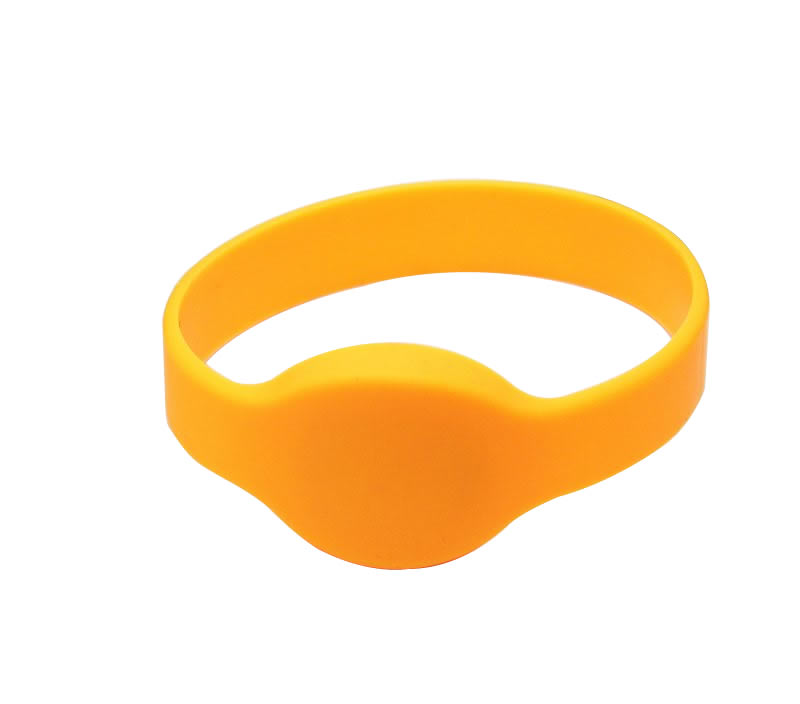
RFID silicone wristbands are reusable, waterproof wearable tags with an embedded chip that opens doors, validates tickets, replaces cash and identifies members.
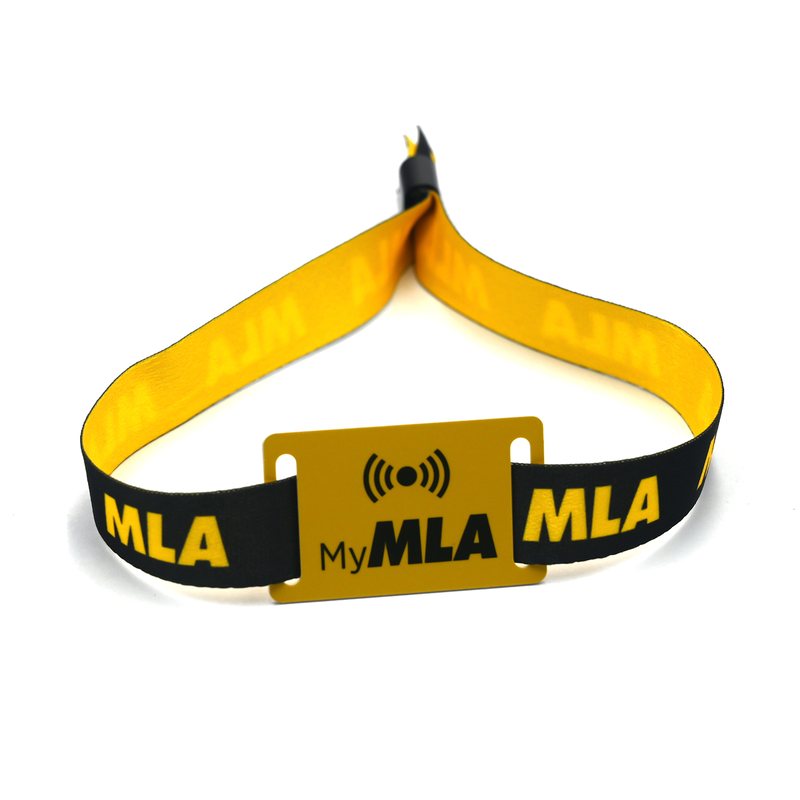
View RFID Silicone Wristband detailsRFID fabric wristbands are woven or printed textile straps fitted with an RFID tag or a moulded face plate.
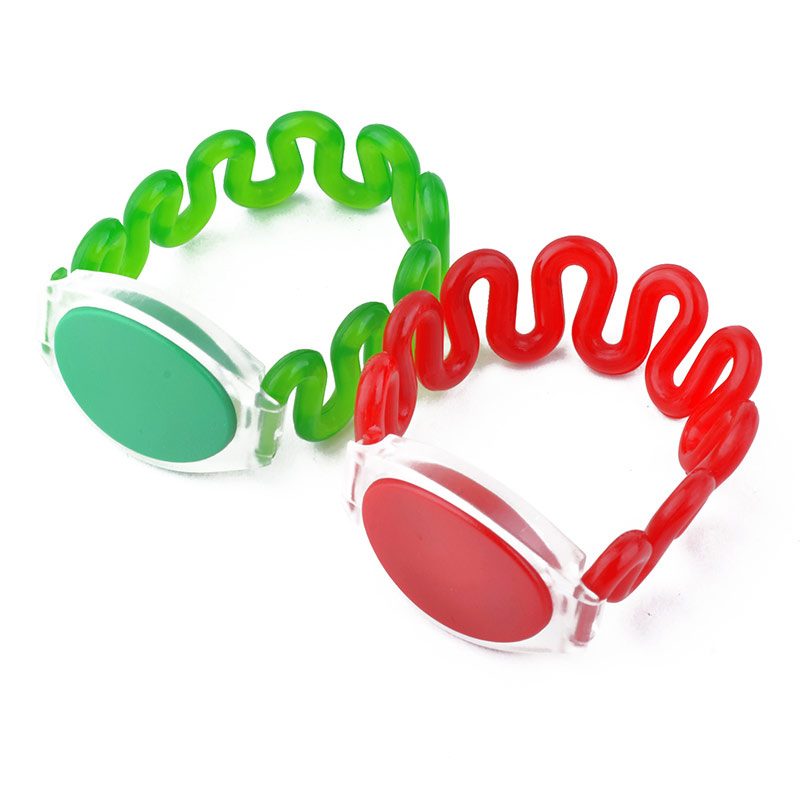
View RFID Fabric Wristband detailsRFID PVC wristbands are lightweight plastic bands with an embedded RFID inlay and an adjustable snap closure.
View RFID PVC Wristband detailsTechnical questions we are most often asked about this frequency.
Most likely, but it has to be matched to the reader rather than assumed: many installed systems read EM4100/EM4200 style 125 kHz IDs, while others expect Hitag or a specific T5577 configuration. Send us the reader or lock model and a working card or fob, or tell us the UID length and format your software expects, and we will propose a compatible chip. We recommend verifying an encoded sample on your actual doors and lockers before the production run.
TK4100 and EM4200-style chips are low-cost read-only UID devices, EM4305 and T5577 are rewritable, and Hitag variants add more memory and authentication features for systems that use them. A read-only UID is enough when your software simply looks up a number in a database; rewritable chips suit projects that issue, revoke or reformat credentials in the field. Tell us what your reader writes and whether the number must ever change, and we will recommend the simplest chip that fits.
No. A phone's NFC reader operates at 13.56 MHz and cannot detect a 125 kHz LF tag, and an LF reader cannot read an NFC tag either. If guests must tap a phone to open a link, check in or share contact details, choose an NTAG or other HF/NFC wristband instead. Where a site needs both an old door system and phone interaction, ask us about issuing separate credentials or a dual-chip construction; feasibility is confirmed per project.
LF is deliberately short range, normally a deliberate tap or close presentation at a door, locker or turnstile, which helps prevent a credential being read from across a room. The actual distance depends on the reader antenna, power, chip, how the band is presented and nearby metal, so we do not quote a fixed range for the band alone. LF generally behaves well around water and metal compared with some higher-frequency tags, but you should still test samples on your real lockers and readers.
For systems you own or administer, we can supply sequential or specified UID ranges, write rewritable chips to the format your reader expects, and provide a mapping file of encoded UIDs and printed numbers for import. This is intended for authorised replacement, migration and spare-credential programmes; we do not help copy credentials you are not authorised to use. Share an existing card, the reader specification and the numbering rules so we can encode and verify a pilot batch.
A plain read-only LF UID is an identifier, not an encrypted credential, and it can be read and reproduced, so it is best suited to low-risk doors, lockers and simple identification. Hitag-based systems and 13.56 MHz options such as MIFARE DESFire offer stronger authentication when your readers support them. Your IT or security team should decide what level of credential protection the site requires; we supply the chip and encoding your chosen system specifies, and do not make security certifications or compliance claims.
The LF module can be sealed into silicone, PVC, vinyl, fabric, elastic and wooden face-plate wristbands, in fixed size, adjustable or one-time closure formats. Silicone suits gyms, pools and multi-day wear, while fabric, vinyl and paper-style builds suit short-term event issuance, and wood or elastic is often chosen for hospitality. Because the LF coil and module need a little space, confirm the band width and closure early so the antenna position and artwork layout can be agreed.
Yes. We can silk screen or deboss your logo, laser-mark or print serial numbers, barcodes and QR codes, and supply a spreadsheet matching each printed number to the encoded UID. That mapping is what most legacy access and membership systems import when issuing a band to a person or locker. Share your artwork, numbering range and whether the printed code must match the UID exactly, and we will verify readability on a sample before production.
LF is the practical choice when you already have a large installed base of 125 kHz readers, need a short controlled tap for lockers and doors, or want a robust, low-cost credential in wet or metal-heavy surroundings. It cannot be read by phones, does not support NDEF records, and is not designed for long-range or multi-tag UHF reads, so new-build projects often choose 13.56 MHz HF/NFC or MIFARE instead. If you are planning a reader upgrade, tell us the target platform and we can help phase the wristband chip change without disrupting existing users.
Share the reader or lock model and an existing credential, the chip or UID format, wristband material and closure, quantity, artwork and variable data, encoding and mapping requirements, packaging and delivery destination. Minimum order quantity, sample and production lead times are confirmed at quotation stage. We recommend a pilot batch tested on your real doors, lockers and software before rollout, especially for legacy systems; material documentation such as RoHS or REACH is available on request.
Send us your reader model or an existing card. We will verify the chip, recommend a wristband construction and encode a sample for testing.