Marathon and race timing
We can build Marathon and race timing into the wristband format that fits this use case.
UHF RFID wristbands operate in the 860-960 MHz band and follow EPCglobal Gen2V2 / ISO/IEC 18000-63. They are read at a much longer distance than HF or LF wristbands, which makes them suitable for hands-free timing and crowd flow monitoring.
UHF RFID wristbands operate in the 860-960 MHz band and follow EPCglobal Gen2V2 / ISO/IEC 18000-63. They are read at a much longer distance than HF or LF wristbands, which makes them suitable for hands-free timing and crowd flow monitoring.
UHF is the right choice when a reader needs to detect many bands quickly without a deliberate tap: marathon timing, ski lifts, festival gates and large-venue entrance counting. We build with Higgs 9, MONZA R6/R6P, MONZA 4E/4QT and UCODE 7/8/8M, and tune the antenna and placement to the wristband format and the reader setup.
In short: Long read range compared with 13.56 MHz and 125 kHz wristbands.
Chip models we commonly embed for this frequency. See the complete chip reference for the full list.
Scroll horizontally to see all columns
| Frequency | Chip model | Protocol / standard |
|---|---|---|
| 860-960 MHz | Higgs 9 | ISO/IEC 18000-63 EPCglobal Gen2V2 |
| 860-960 MHz | MONZA R6 / R6P | ISO/IEC 18000-63 EPCglobal Gen2V2 |
| 860-960 MHz | MONZA 4E / 4QT | ISO/IEC 18000-63 EPCglobal Gen2V2 |
| 860-960 MHz | UCODE 7 / 8 / 8M | EPCglobal Gen2V2 |
We can build Marathon and race timing into the wristband format that fits this use case.
We can build Ski lift and turnstile access into the wristband format that fits this use case.
We can build Festival gate counting into the wristband format that fits this use case.
We can build Large venue crowd analytics into the wristband format that fits this use case.
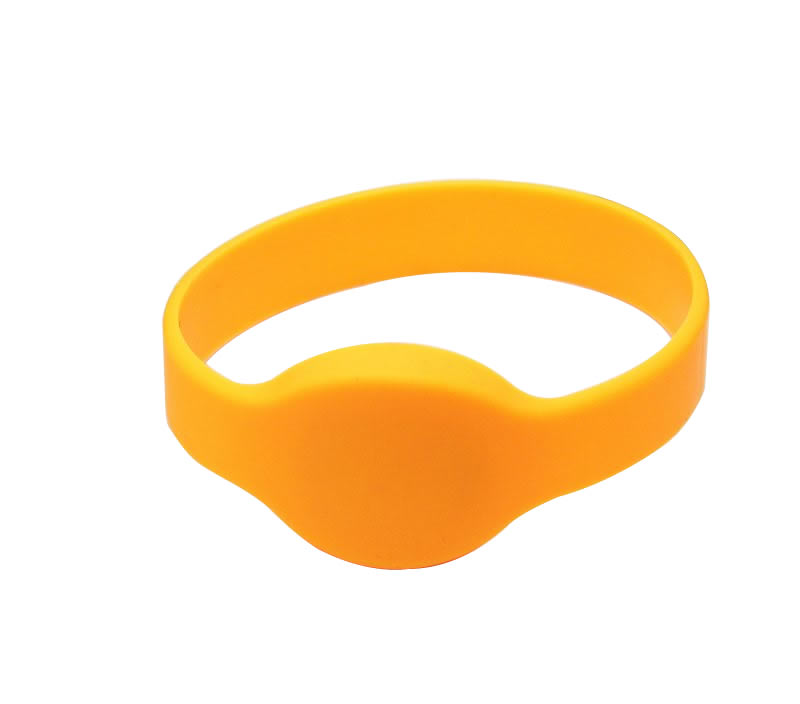
RFID silicone wristbands are reusable, waterproof wearable tags with an embedded chip that opens doors, validates tickets, replaces cash and identifies members.
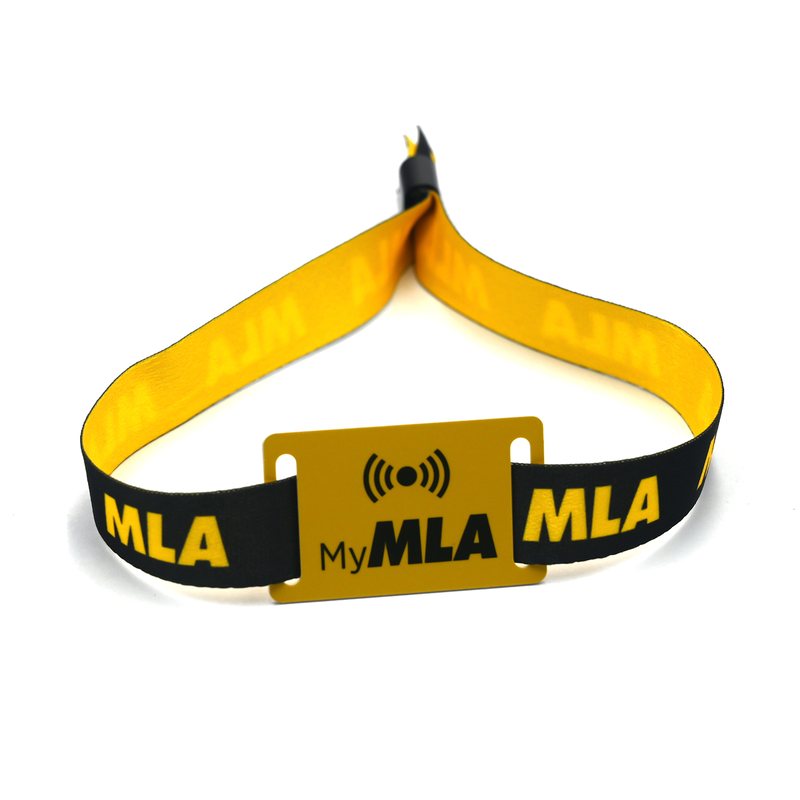
View RFID Silicone Wristband detailsRFID fabric wristbands are woven or printed textile straps fitted with an RFID tag or a moulded face plate.
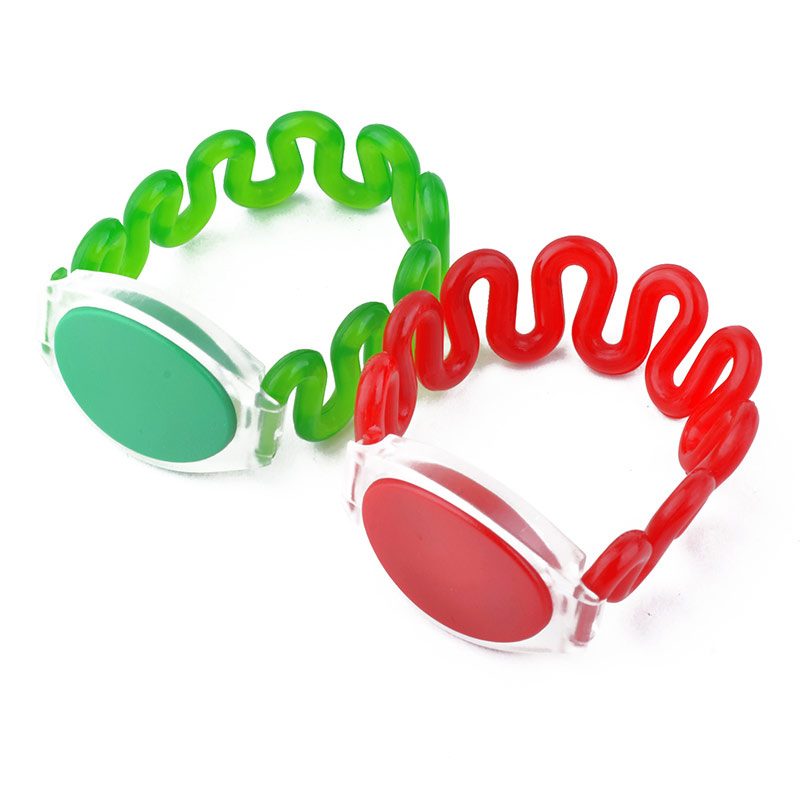
View RFID Fabric Wristband detailsRFID PVC wristbands are lightweight plastic bands with an embedded RFID inlay and an adjustable snap closure.
View RFID PVC Wristband detailsTechnical questions we are most often asked about this frequency.
UHF reads much farther than a 13.56 MHz or 125 kHz tap, but we do not quote a fixed distance for the band alone. Range depends on reader power and antenna gain, chip sensitivity, inlay and antenna tuning, how the band sits against the body, crowd density and nearby metal or water. We tune the inlay to your wristband format and recommend an on-site test with your actual readers before you size gates, timing mats or lanes.
The 860-960 MHz band is allocated differently by region, for example the FCC band in North America, the ETSI band in Europe and other national allocations across Asia, so an inlay tuned for one market may underperform in another. Tell us the destination country and where the readers will be installed, and we will specify a compatible frequency range and antenna design. Local power limits, radio approvals and reader configuration remain the responsibility of your integrator.
UHF follows EPCglobal Gen2V2 / ISO/IEC 18000-63 and is built for longer-range, hands-free and multi-tag reads, while HF/NFC and 125 kHz LF are short-range technologies that normally need a deliberate tap. A standard smartphone NFC reader cannot read a UHF wristband; you need UHF fixed readers, handhelds or portal antennas. Choose UHF for timing, gate counting and crowd flow, and HF/NFC or MIFARE when guests must tap a phone, hotel lock or payment terminal.
The decision is usually about sensitivity, EPC and user memory, and whether you need extra features rather than just a unique identifier. R6/R6P and UCODE 8 style chips suit high-volume, cost-sensitive identification with an EPC number, while MONZA 4E/4QT, UCODE 8M and Higgs 9 give more user memory or additional functions when your system writes data to the tag. Tell us what your reader reads, how many bytes you need and whether the tag must be rewritten, and we will propose a chip from the list we build with.
Yes, that is the main reason to choose UHF: EPC Gen2 anti-collision lets a reader singulate many tags in a short window, which suits marathon timing mats, ski lift gates and festival entrance counting. Real throughput depends on antenna placement, RF power, portal width, walking speed and how many bands are in the field at once. Dense crowds and adjacent lanes can also cause stray reads, so we recommend a field trial with your middleware and antenna layout before committing to a full rollout.
The body absorbs and detunes RF energy, and water, metal lockers, turnstiles and foil-lined packaging can all reduce or distort a UHF read. That is why a wristband inlay is not simply a sticker antenna: we position and tune it for the band construction, keep it away from metal fittings, and advise how the band should be worn. Silicone and fabric behave differently, so test a physical sample in the real environment, especially for water parks and wet race conditions.
Yes. We can write EPC values, supply the chip's read-only TID for reconciliation, and print or laser-mark matching serials, barcodes or QR codes with a mapping file for your software. Every band should carry a unique EPC, and we can lock the EPC bank so it cannot be overwritten in the field; access and kill passwords under Gen2V2 are managed by your system, not by us. We normally recommend keeping names and personal data in your backend and leaving only an identifier on the band.
UHF inlays can be sealed into silicone, fabric, elastic, PVC, vinyl and paper wristbands, and into hybrid builds with a rigid face plate. Closed-loop silicone suits season passes and water exposure, fabric or vinyl suits single-day event issuance, and wide face plates give the antenna more room. Because a UHF antenna is larger and more sensitive to its surroundings than an HF inlay, tell us the format, size and closure you want early so we can confirm the antenna layout before artwork is finalised.
You need UHF readers or portals, antennas, cabling and middleware that speaks EPC Gen2, plus any timing or access software that consumes the EPC data. We supply and encode the wristbands, but we are not the reader or system integrator, so confirm your reader model, antenna polarisation, output power and supported protocols before ordering. Sending us an existing tag or reader specification lets us prepare compatible encoded samples for your integrator to validate.
Share the destination country and frequency band, preferred chip or reader model, wristband material and closure, quantity, encoding and variable data requirements, artwork, packaging and delivery destination. Minimum order quantity, sample and production lead times are confirmed at quotation stage. We recommend a pilot batch tested with your real readers, antennas and peak crowd density before a race or festival go-live; material or compliance documentation such as RoHS or REACH is available on request.
Send us your reader model or an existing card. We will verify the chip, recommend a wristband construction and encode a sample for testing.